Green Flash Brewing Company is one of the most important breweries in San Diego history, and also one of its saddest stories. Founded in Vista in 2002 by Mike and Lisa Hinkley, Green Flash helped define the West Coast IPA, grew into one of the largest craft breweries in America, and then lost almost everything to overexpansion. The beer is still out there, but the San Diego brewery that made it famous is gone.
The basics
- Location: 6550 Mira Mesa Boulevard, San Diego (former headquarters and tasting room, now closed); originally founded in Vista
- Founded: 2002, by Mike and Lisa Hinkley
- Known for: West Coast IPA, defining the West Coast IPA style; Le Freak; Palate Wrecker; aggressive, hop-forward beers
The taproom
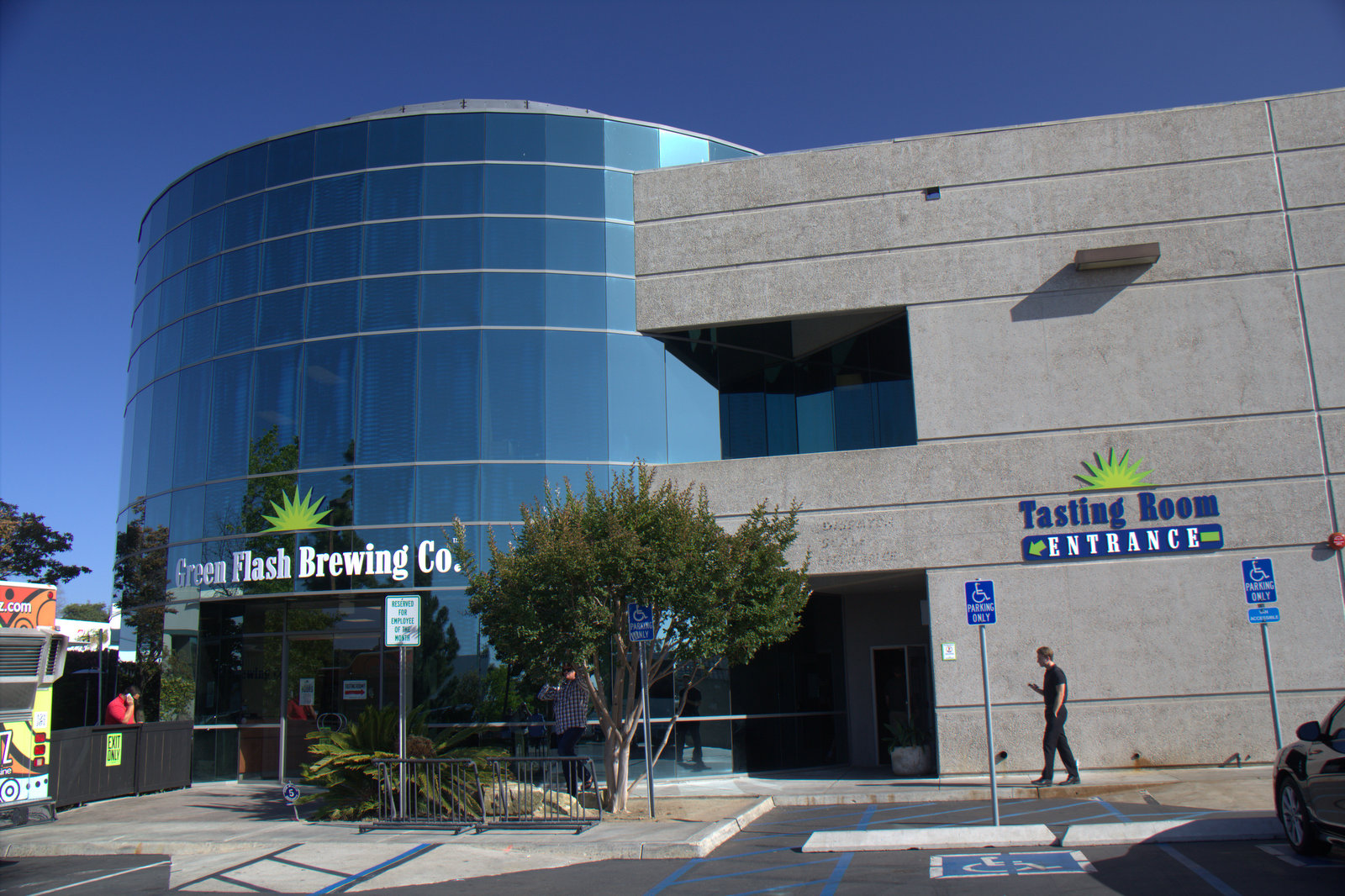
Here is the honest part: there is no Green Flash taproom to visit anymore. The Mira Mesa tasting room, the big 44,000-square-foot facility the brewery moved into in 2011, is closed, and the photo above shows the building as it looked in 2013. Green Flash no longer has a physical operation in California. The beers are still brewed, now in Fort Collins, Colorado, and they are still available in stores, but the experience of walking into the Mira Mesa taproom and ordering a flight is a memory. If you want the closest thing to the old Green Flash world, head east to Alpine, where Pat McIlhenney reopened under his own name as McIlhenney Brewing in 2020, carrying on the Alpine Beer Co. legacy that Green Flash once owned.
Standout beers
- West Coast IPA: The flagship, created in 2005 by brewmaster Chuck Silva. At 7%, it is brewed with Simcoe, Columbus, Centennial, Citra, and Cascade hops, and it is the beer that put the words West Coast IPA on labels across the country.
- Imperial West Coast IPA: An 8.9% amplified version built on Summit and Nugget hops, with evergreen and pineapple notes and a much bigger bitter punch.
- Hazy West Coast IPA: Added to the core lineup in 2022, a softer, juicier take on the house style for drinkers who want the Green Flash hop character without the bite.
- Le Freak: A 2006 creation from Chuck Silva, a Belgian-inspired ale that blends tripel character with American hops. It was one of the first beers to show that Green Flash could do more than IPA.
- Palate Wrecker: The famously punishing hop bomb from the IBU wars, a relic of the era when Green Flash competed to brew the hoppiest beer in America.
Our take
Green Flash matters because it named a style. Before West Coast IPA was a category on every beer menu in the country, it was a Green Flash beer, and the brewery’s aggressively hopped, high-alcohol approach set the template for San Diego IPA for a decade. At its peak in 2016, Green Flash was the 37th largest craft brewery in the United States, producing 91,000 barrels a year.
The fall was just as fast. A $20 million Virginia Beach expansion, a barrel-aging facility in Poway, and national distribution built a company that could not survive a downturn. In 2018, the brewery’s lender foreclosed and sold the business to an investor group, WC IPA LLC. In December 2021, SweetWater Brewing, owned by Tilray, acquired the Green Flash and Alpine brands, moved brewing to Colorado, and left the Mira Mesa facility out of the deal.
What is left is a good beer with a complicated legacy. West Coast IPA still tastes like the benchmark it always was, and it is still easy to find. But the brewery that made San Diego the capital of West Coast IPA no longer exists in San Diego, and that is worth saying plainly. Drink the beer, remember the brewery, and visit the small breweries that learned from it.
Leave a Reply